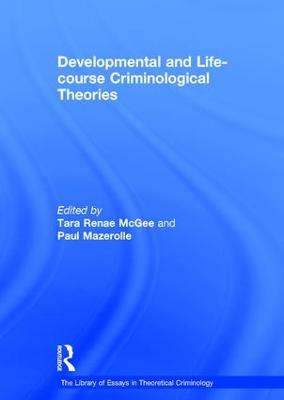
Developmental and Life-course Criminological Theories
 -15%
portes grátis
-15%
portes grátis
Developmental and Life-course Criminological Theories
McGee, Tara Renae; Mazerolle, Paul
Taylor & Francis Ltd
03/2015
536
Dura
Inglês
9780754629641
15 a 20 dias
1270
Descrição não disponível.
Contents: Introduction. Part I Key Theoretical Papers: The social development model: an integrated approach to delinquency prevention, J. David Hawkins and Joseph G. Weis; A developmental perspective on antisocial behavior, G.R. Patterson, Barbara D. DeBaryshe and Elizabeth Ramsey; Life-course desisters? Trajectories of crime among delinquent boys followed to age 70, Robert J. Sampson and John H. Laub; Life-course-persistent versus adolescence-limited antisocial behavior, Terrie E. Moffitt; The Integrated Cognitive Antisocial Potential (ICAP) theory, David P. Farrington; Situational action theory, Per-Olof H. WikstrA?m, Dietrich Oberwittler, Kyle Treiber and Beth Hardie. Part II Tests of Theory: Problem behavior in the middle school years: an assessment of the social development model, Christopher J. Sullivan and Paul Hirschfield; Two routes to delinquency: differences between early and late starters in the impact of parenting and deviant peers, Ronald L. Simons, Chyi-in Wu, Rand D. Conger and Frederick O. Lorenz; Residential change as a turning point in the life course of crime: desistance or temporary cessation?, David S. Kirk; Delinquent development in a sample of high-risk youth: shape, content, and predictors of delinquent trajectories from age 12 to 32, Victor van der Geest, Arjan Blokland and Catrien Bijleveld; Exploring long-term and short-term risk factors for serious delinquency, Andre M. van der Laan, Martine Blom and Edward R. Kleemans; Does the effect of self-control on adolescent offending vary by level of morality? A test in three countries, Robert Svensson, Lieven Pauwels and Frank M. Weerman. Part III Debates and Challenges: A life-course view of the development of crime, Robert J. Sampson and John H. Laub; Offender classifications and treatment effects in developmental criminology: a propensity/event consideration, Michael R. Gottfredson; Participation and frequency during criminal careers across the life span, Hanno Petras, Paul Nieuwbeerta and Alex R. Piquero; Generality, continuity, and change in offending, Raymond Paternoster, Charles W. Dean, Alex Piquero, Paul Mazerolle and Robert Brame; Marriage and desistance from crime in the Netherlands: do gender and socio-historical context matter?, Bianca E. Bersani, John H. Laub and Paul Nieuwbeerta; Long-term crime desistence and recidivism patterns - evidence from the Essex County convicted felon study, Megan C. Kurlychek, Shawn D. Bushway and Robert Brame. Name index.
Este título pertence ao(s) assunto(s) indicados(s). Para ver outros títulos clique no assunto desejado.
juvenile delinquency research;criminal career patterns;risk factor analysis;offender desistance studies;peer influence criminology;longitudinal offending studies;empirical tests of antisocial behaviour theories
Contents: Introduction. Part I Key Theoretical Papers: The social development model: an integrated approach to delinquency prevention, J. David Hawkins and Joseph G. Weis; A developmental perspective on antisocial behavior, G.R. Patterson, Barbara D. DeBaryshe and Elizabeth Ramsey; Life-course desisters? Trajectories of crime among delinquent boys followed to age 70, Robert J. Sampson and John H. Laub; Life-course-persistent versus adolescence-limited antisocial behavior, Terrie E. Moffitt; The Integrated Cognitive Antisocial Potential (ICAP) theory, David P. Farrington; Situational action theory, Per-Olof H. WikstrA?m, Dietrich Oberwittler, Kyle Treiber and Beth Hardie. Part II Tests of Theory: Problem behavior in the middle school years: an assessment of the social development model, Christopher J. Sullivan and Paul Hirschfield; Two routes to delinquency: differences between early and late starters in the impact of parenting and deviant peers, Ronald L. Simons, Chyi-in Wu, Rand D. Conger and Frederick O. Lorenz; Residential change as a turning point in the life course of crime: desistance or temporary cessation?, David S. Kirk; Delinquent development in a sample of high-risk youth: shape, content, and predictors of delinquent trajectories from age 12 to 32, Victor van der Geest, Arjan Blokland and Catrien Bijleveld; Exploring long-term and short-term risk factors for serious delinquency, Andre M. van der Laan, Martine Blom and Edward R. Kleemans; Does the effect of self-control on adolescent offending vary by level of morality? A test in three countries, Robert Svensson, Lieven Pauwels and Frank M. Weerman. Part III Debates and Challenges: A life-course view of the development of crime, Robert J. Sampson and John H. Laub; Offender classifications and treatment effects in developmental criminology: a propensity/event consideration, Michael R. Gottfredson; Participation and frequency during criminal careers across the life span, Hanno Petras, Paul Nieuwbeerta and Alex R. Piquero; Generality, continuity, and change in offending, Raymond Paternoster, Charles W. Dean, Alex Piquero, Paul Mazerolle and Robert Brame; Marriage and desistance from crime in the Netherlands: do gender and socio-historical context matter?, Bianca E. Bersani, John H. Laub and Paul Nieuwbeerta; Long-term crime desistence and recidivism patterns - evidence from the Essex County convicted felon study, Megan C. Kurlychek, Shawn D. Bushway and Robert Brame. Name index.
Este título pertence ao(s) assunto(s) indicados(s). Para ver outros títulos clique no assunto desejado.